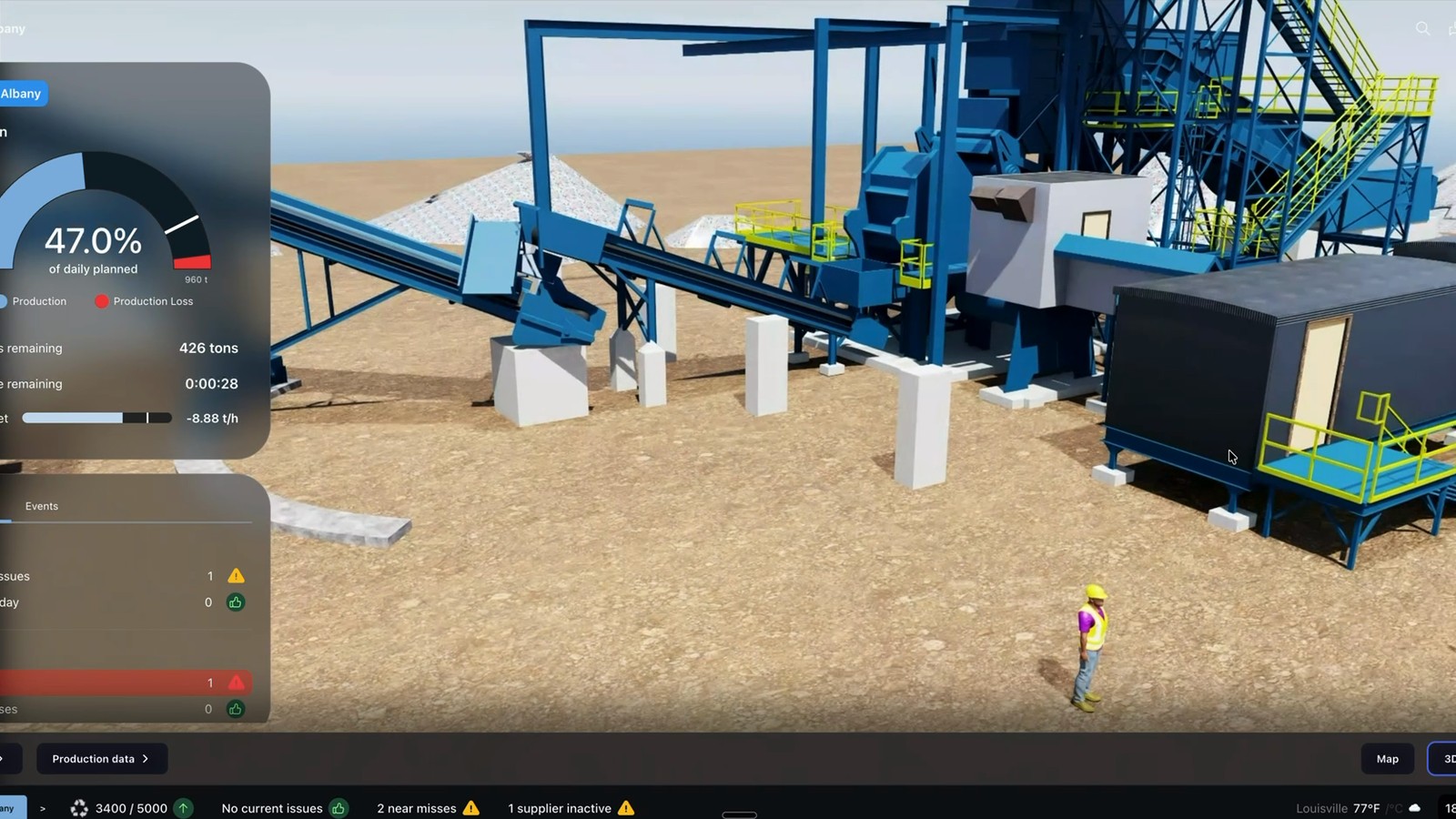
If someone has mentioned 3D laser scanning to you as a solution for your facility documentation challenges, you may have nodded along while wondering exactly how any of it works. It’s a fair question. The technology is genuinely powerful, and most explanations of it either go too deep into the hardware or stay so high-level they don’t tell you anything useful.
This is the plain-English version. What actually happens when a scanning crew shows up at your facility, what they produce, and what your team does with it afterward.
The Basic Idea: Measuring Everything at Once
A 3D laser scanner works by firing millions of laser pulses in every direction from a fixed point and measuring how long each pulse takes to return. Because the speed of light is constant, the time measurement translates directly into a distance. Do that millions of times per second across a full 360° sweep, and you build an extraordinarily dense cloud of precise distance measurements, a point cloud.
Each point in that cloud represents an exact location in three-dimensional space. The wall is exactly here. The pipe is exactly there. The clearance between them is exactly this many millimeters. There’s no estimating, no tape measure, no “approximately.”
What Happens On-Site
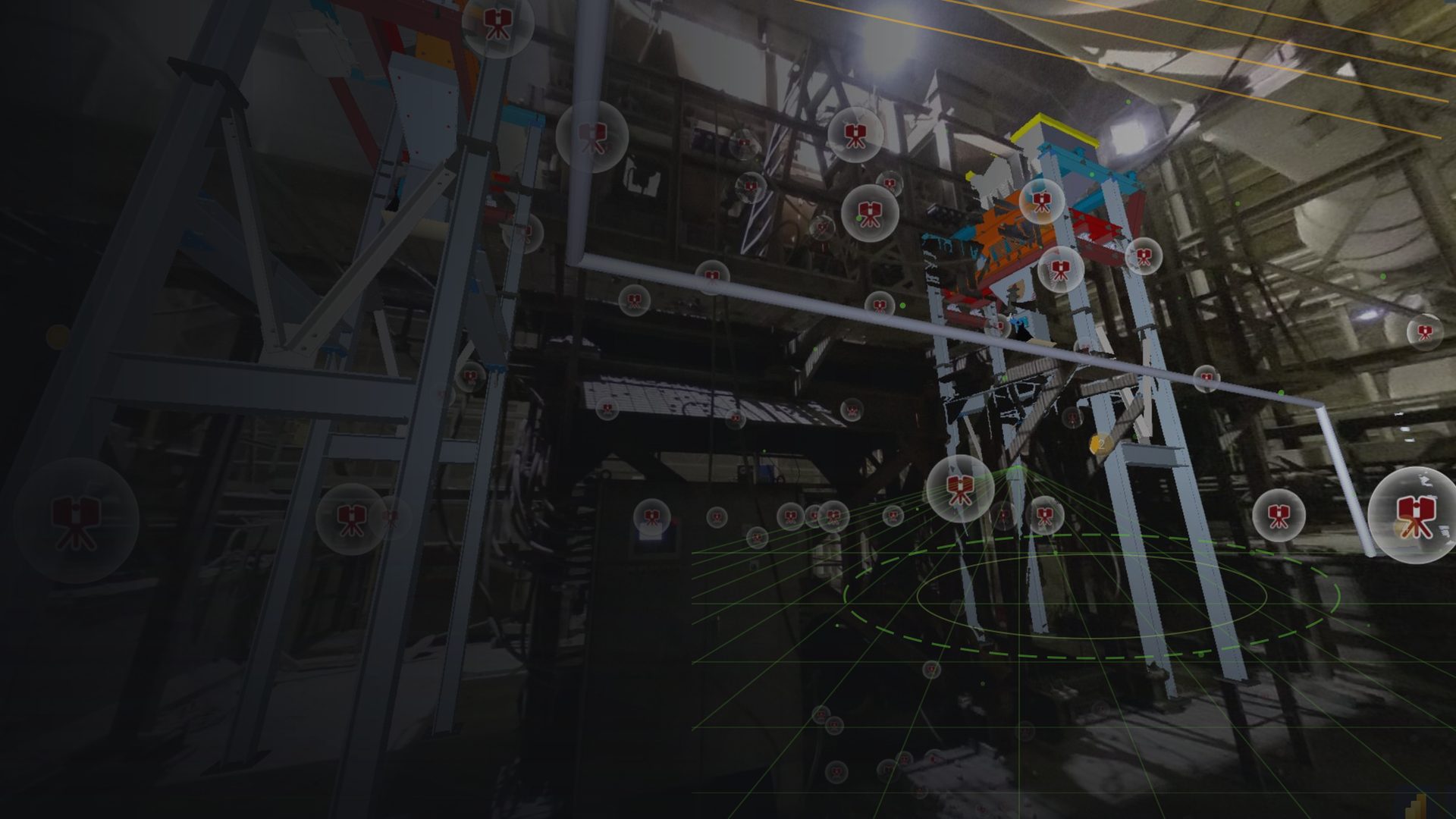
A scanning crew visits your facility and sets up the scanner at multiple positions throughout the space, wherever coverage is needed. Each position takes a few minutes to capture. The scanner rotates slowly, collecting data in all directions. For a large industrial facility, a full scan campaign might take one to several days depending on the scope and complexity.
Critically, this process doesn’t require your facility to shut down. Scanners capture data around equipment in operation, around people moving through the space, and in live conditions. The scan crew works around your schedule, not the other way around.
When the field work is done, the individual scan positions are registered together, stitched into a single, unified 3D model of the entire facility.
What You Get: The Point Cloud
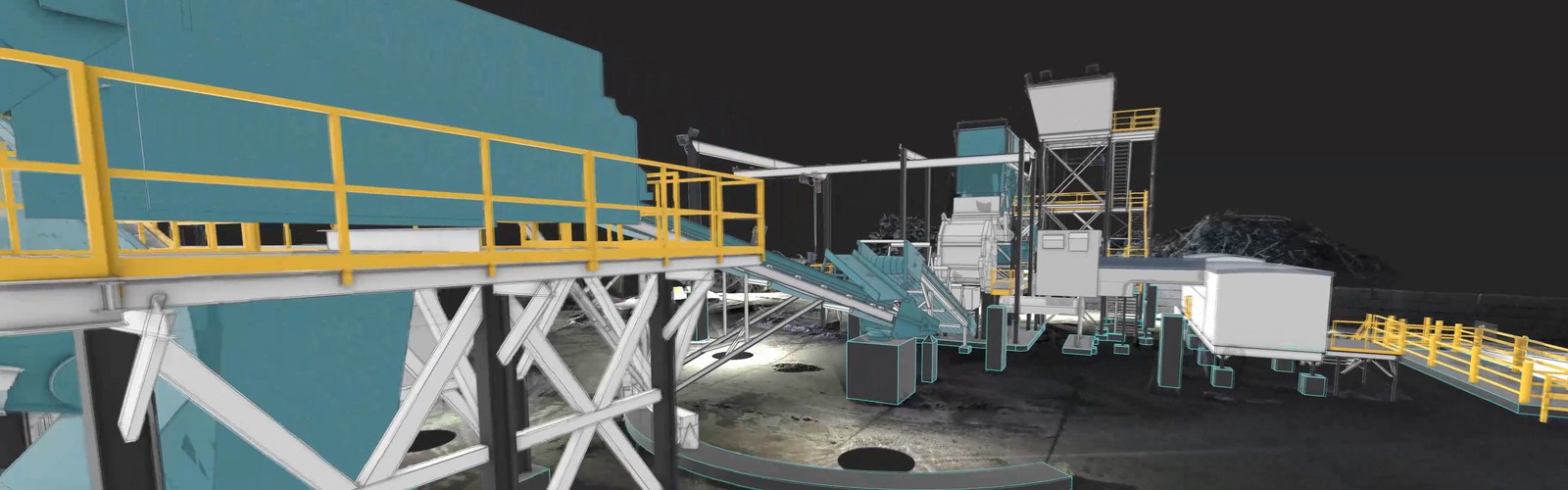
The primary deliverable is a point cloud, a three-dimensional dataset representing every surface the scanner could see. Depending on the scanner and conditions, accuracy runs to within a few millimeters across large distances.
That point cloud is navigable. Your engineers can load it in standard software, measure any dimension in it, pull cross-sections, and extract geometry. Anything they could measure in the field, they can now measure from their desk, and do it in a fraction of the time.
How It Connects to CAD and BIM
Raw point cloud data is valuable, but for many engineering and construction workflows, you want a model, clean geometry that fits into a CAD or BIM environment. Depending on your needs, the point cloud can be used as an accurate reference layer, or it can be modeled into a full BIM deliverable with individual elements, walls, columns, pipes, equipment, as discrete objects.
Either way, the output lands in software your team already knows: Revit, AutoCAD, Navisworks, or similar platforms. There’s no new system to learn. The accurate data just replaces the inaccurate data you were working from before.
What Kinds of Facilities Benefit Most
3D laser scanning delivers the most value where the gap between documented reality and physical reality is largest, and where that gap is costing money. That tends to be:
- Industrial manufacturing facilities with complex process systems built up over decades
- Hospitals and healthcare campuses with dense MEP systems and frequent renovation cycles
- University campuses managing large portfolios of buildings with inconsistent documentation
- Event centers and arenas supporting regular tenant buildouts and production installs
- Processing and distribution facilities planning equipment upgrades or capacity expansions
If your team regularly loses time to field measurement, drawing conflicts, or change orders tied to as-built discrepancies, the economics of scanning typically justify themselves on the first project that uses the data.
How Long Does It Take?
Scan campaigns for most commercial and industrial facilities run between one and five days of field work, depending on scope. Deliverable turnaround after field work is typically one to three weeks. The full process, from booking a virtual site visit to having CAD-ready deliverables in your engineers’ hands, usually runs four to six weeks for most projects.
Ready to See What It Looks Like for Your Facility?
Spartan Scanning Solutions provides professional 3D laser scanning and digital documentation for commercial and industrial facilities across the Midwest, Ohio, Michigan, Illinois, Indiana, and beyond. We start every engagement with a free virtual site visit so you understand exactly what the process looks like for your specific facility before committing to anything.