Fewer change orders. Tighter contingencies. Installs that fit.
Steel | For capital projects directors
Fund projects on measured reality, not on drawings that stopped being true.
Plans built on old drawings meet reality mid-outage. Parts do not fit. Crews wait. Every extra day is production you never get back, and a six-day shutdown that runs one day over costs you a full day of output at about $250,000 an hour.
Need help?
Call us to speak with one of our experts
How the Visual Twin solves it
What a Visual Twin does for capital projects.
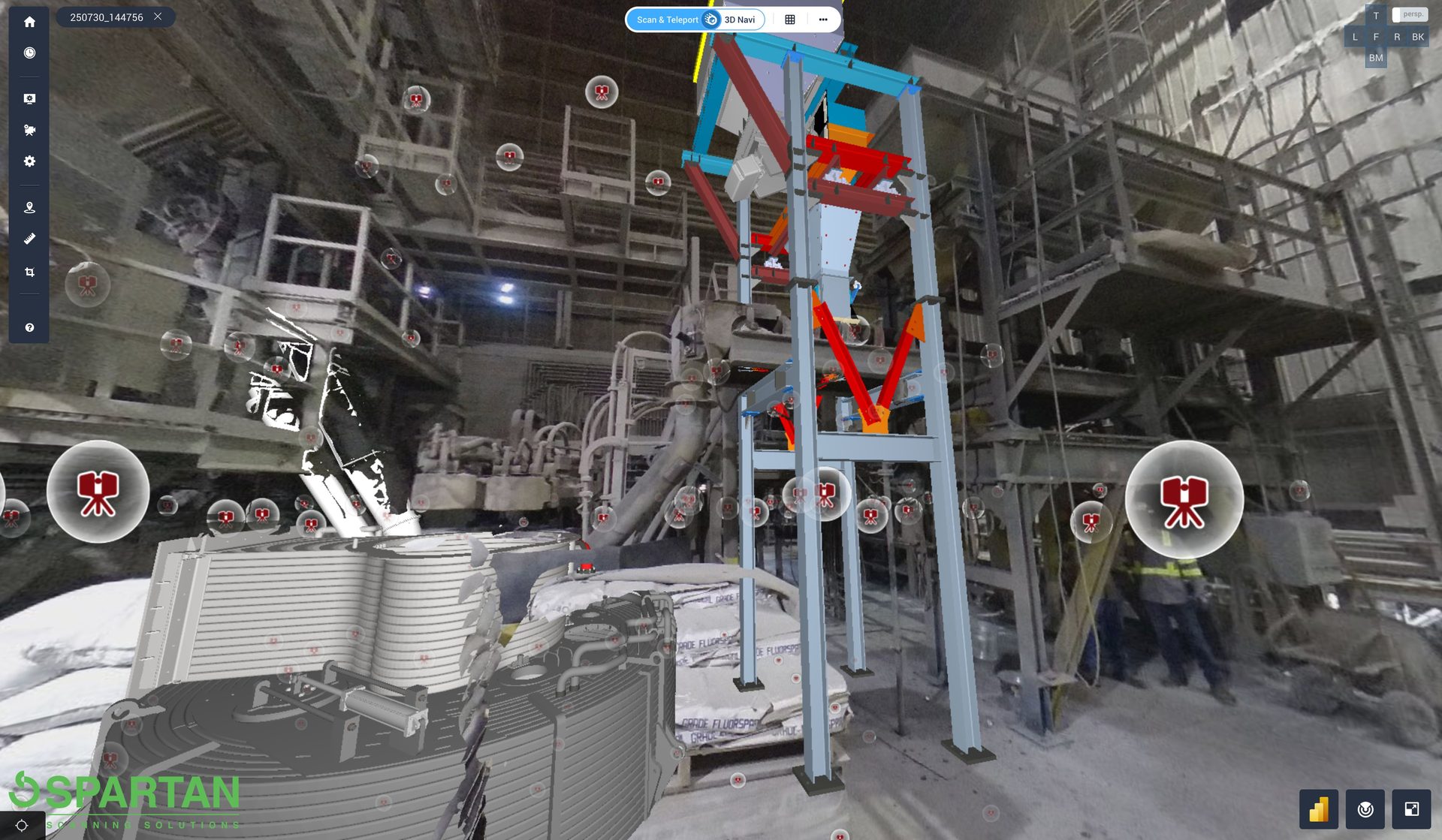
Capture the project area, set the Baseline Map, and give every engineer and bidder the same true conditions. Test the fit of new assets and the rigging path before purchase. Validate the outage plan before contractors mobilize, then track the build against baseline as work progresses.
The workflow in practice
- Prove install feasibility before the purchase order is cut
- Scope and bid from the Visual Twin instead of site walks
- Run a shutdown readiness review of the full work envelope before every outage
- Track what changed after every project with the Physical Drift Monitor
Proof it pays
The shutdown that got two days back.
Within about an hour of scanning, the Visual Twin showed a steel producer that their planned approach was not going to work. Spartan helped validate a new plan before a single contractor mobilized. Eighteen contractor crews worked from one model and the outage finished two days early, worth roughly $2 million in restored production. Download the one-page case study or run your own numbers in the downtime calculator.
Related
More jobs your Visual Twin does every week.
Testimonial
What clients say about us